Coffee in Chiang Mai grew up in slow stages. The first wave was instant Nescafe and condensed milk at roadside stalls. The second wave was the arrival of the international chains in the 2000s. The third wave — the one that has actually given the city its current character — came in the late 2010s, when a generation of returnee Thai baristas began roasting beans grown a few hours north in the highlands around Doi Chaang and Doi Pangkhon. The result is a small but unusually serious specialty coffee scene that punches well above the city's size.
What follows is not a comprehensive list. Comprehensive lists go out of date in three months in any active coffee city. It is a map of the neighbourhoods worth walking, with one or two anchor venues each, so that you can build your own afternoon around what your taste turns out to be.
Nimman: The Roastery District
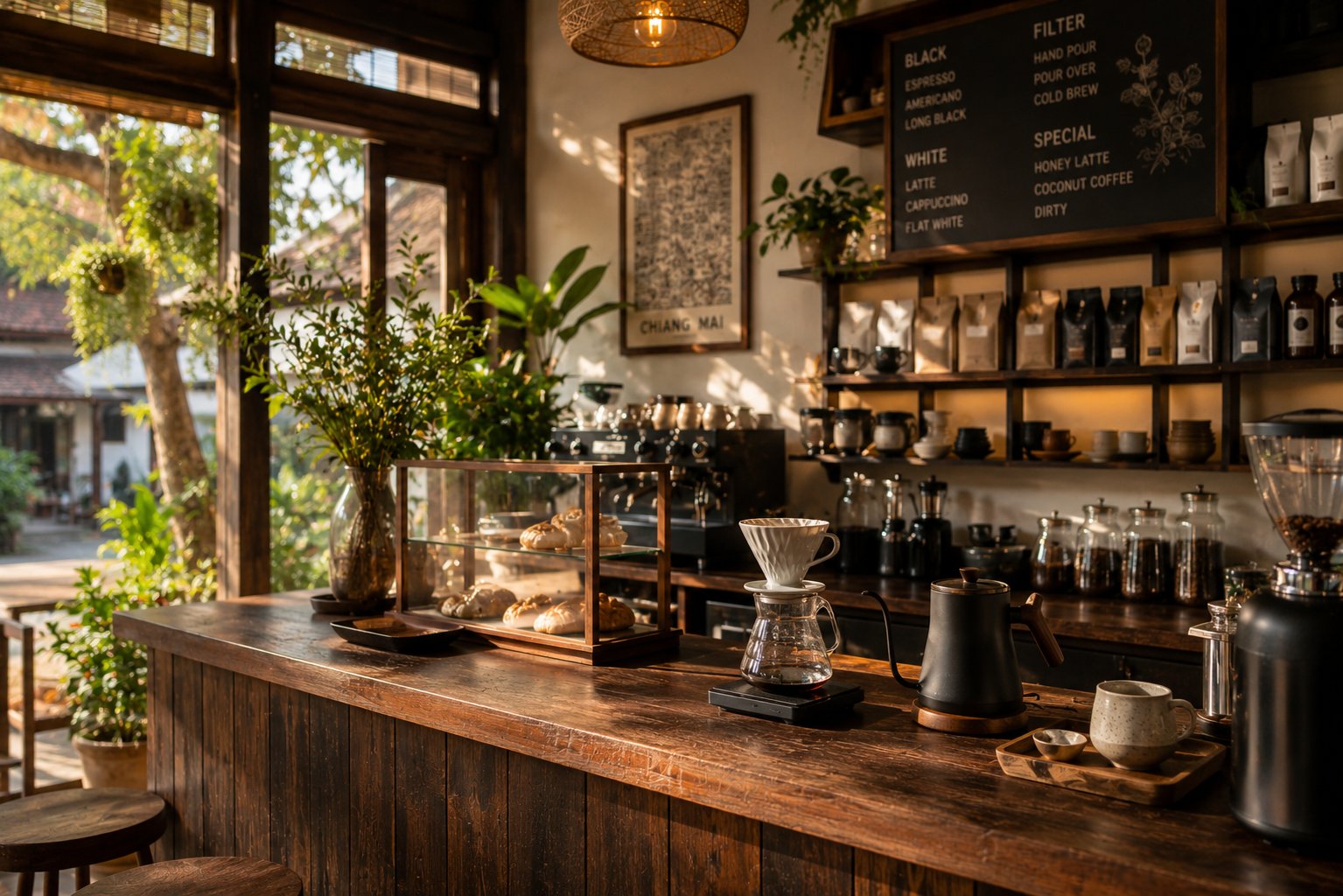
Most of the city's serious roasters operate out of Nimman, west of the moat. The roads of interest are Nimmanhaemin itself, Soi 7, and the smaller lanes around the One Nimman complex. You will find at least four roasteries within a fifteen-minute walk of each other, all roasting Thai-origin beans, all offering pour-overs and espresso, and all genuinely curious about which growing area you prefer.
The one to start with, if you can only visit one, is a small bar tucked into Soi 7 with a single ten-kilo roaster visible behind the counter. The barista there will happily talk you through the difference between a washed Doi Chaang and a natural-process bean from Mae Suay. Bring a notebook. Take notes. You will want to remember the names when you visit the next place.
The Old City: The Quiet Cafes
Inside the moat, the rhythm is different. The cafes here lean more toward atmosphere than toward the technical specialty end — old shophouses, courtyard gardens, mid-century furniture, occasional resident dog. The coffee is still good, especially at the half-dozen venues that source from the better Nimman roasters, but the focus is on sitting down for an hour rather than on dialling in your fifth pour-over of the day.
This is where to come to write, or to recover from a temple walk, or to wait out the early afternoon heat. The two best venues are on the small lanes north of Ratchadamnoen, between Soi 6 and Soi 8. Both serve a single decent espresso blend and a few seasonal pour-over options, and both have the kind of staff who will leave you alone for two hours if that is what you need.
Riverside and Wualai: The Newer Wave
East of the river and south along Wualai, a newer wave of roasters has set up in the last two or three years. These tend to be smaller, more design-conscious, and more interested in single-farm relationships than in roasting volume. The coffee is sometimes the best in the city. The hours are less reliable.
One Wualai venue runs a Sunday-only roasting session that doubles as a public cupping — you can taste five lots side by side and leave with a bag of whichever interested you most. It is the most thoughtful coffee experience available anywhere in Chiang Mai for the price, which is a price most people will not believe when they hear it.
Why Northern Thai Coffee Matters
The reason the Chiang Mai scene feels different from, say, the Bangkok specialty scene is that the supply chain here is genuinely short. A bean grown two hours north can be roasted on a Tuesday and brewed on a Thursday by the same person who roasted it. Several of the better cafes have direct visiting relationships with their farms and can tell you which family picked the lot you are drinking. That kind of traceability is rare anywhere in the world, and Chiang Mai has more of it than its quiet reputation suggests.
For a slow traveller, this is one of the small luxuries of staying in the city for a few weeks. The coffee gets more interesting the longer you stay, because the baristas remember you, and the next bag is always different from the last.